


By Jamie McPherson, proud Wadawurrung man, Connection to Country Officer
Today marks the first day of NAIDOC Week, fifty years since it began. Reconciliation Week closed a month ago, but I’ve never believed the work between those two weeks is the only place for it to live. It lives in what gets built in the gaps, a year-round commitment to working together. This year at the VIS, I saw what that looks like.
Firstly, I’d like to acknowledge that reconciliation is not just a week-long event but something we do every day. However, it’s great to have an opportunity to acknowledge the key dates of our journey to where we are today and highlight the past, present and future of reconciliation.
National Reconciliation Week dates are fixed for a reason, 27 May marks the anniversary of the 1967 referendum, 3 June the 1992 Mabo decision. These are not symbolic bookends. They are pillars. And this year at the VIS, I saw what it looks like when people build something real between them.
The Yarning Circle
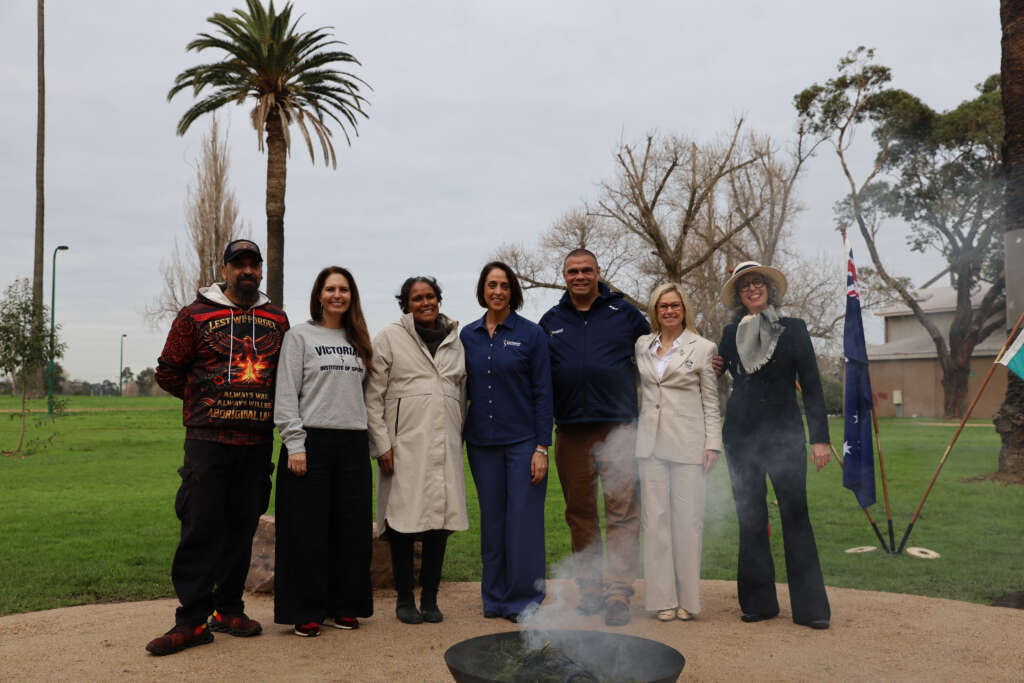
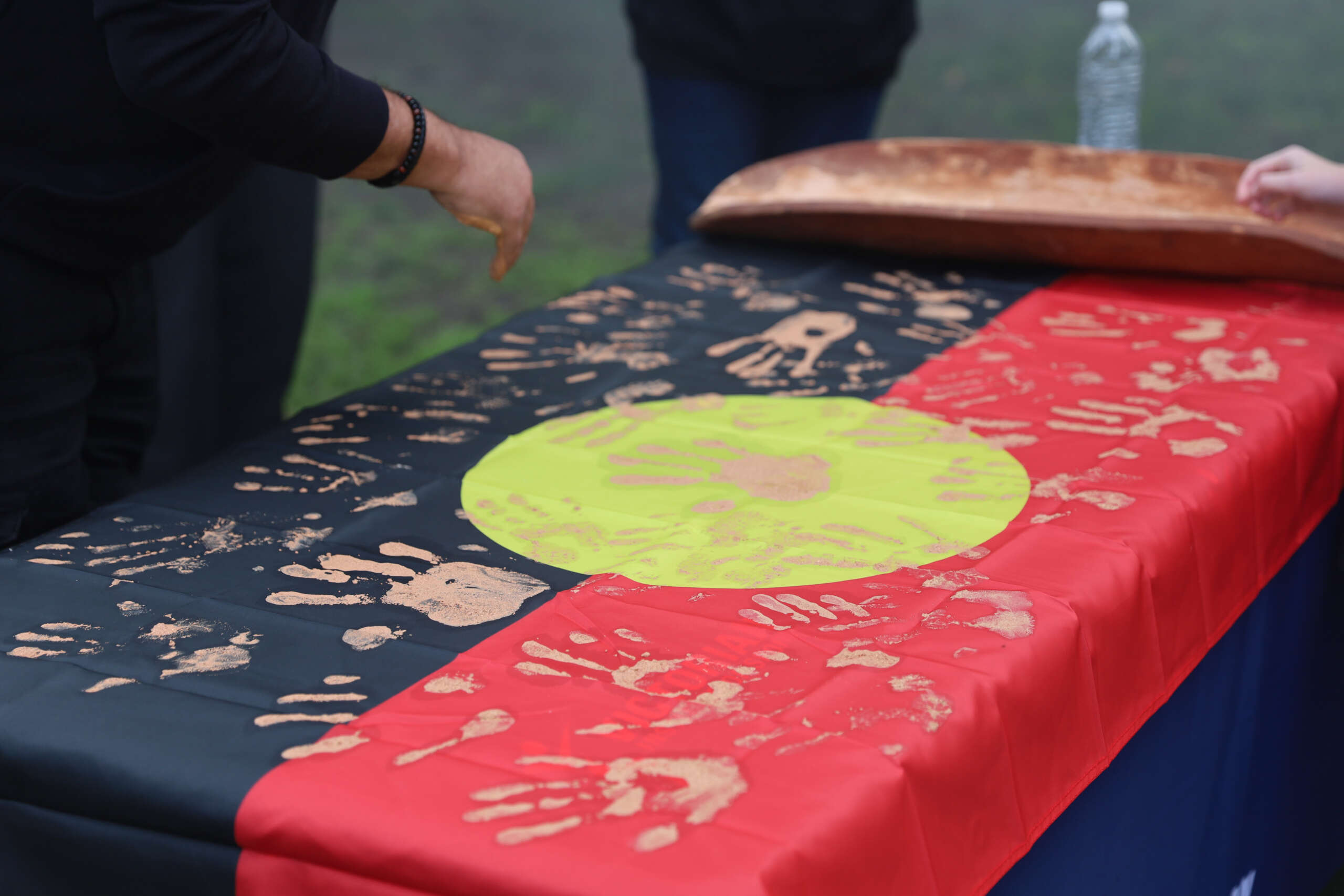
On the Friday before Reconciliation Week opened, I hosted our second Reconciliation Yarning Circle at the VIS. Working with the VIS team, I brought together key figures from the high performance sports sector and First Nations community members with direct connections to sport. This year we were lucky to have VIS alumni Catherine Freeman in the circle. This was not a panel, nor a workshop with a facilitator and dot points. It was a safe space for all to yarn with everyone treated as equals which lead to genuine exchanges about where reconciliation sits in our system, and where it needs to go.
That is what progress looks like for me.
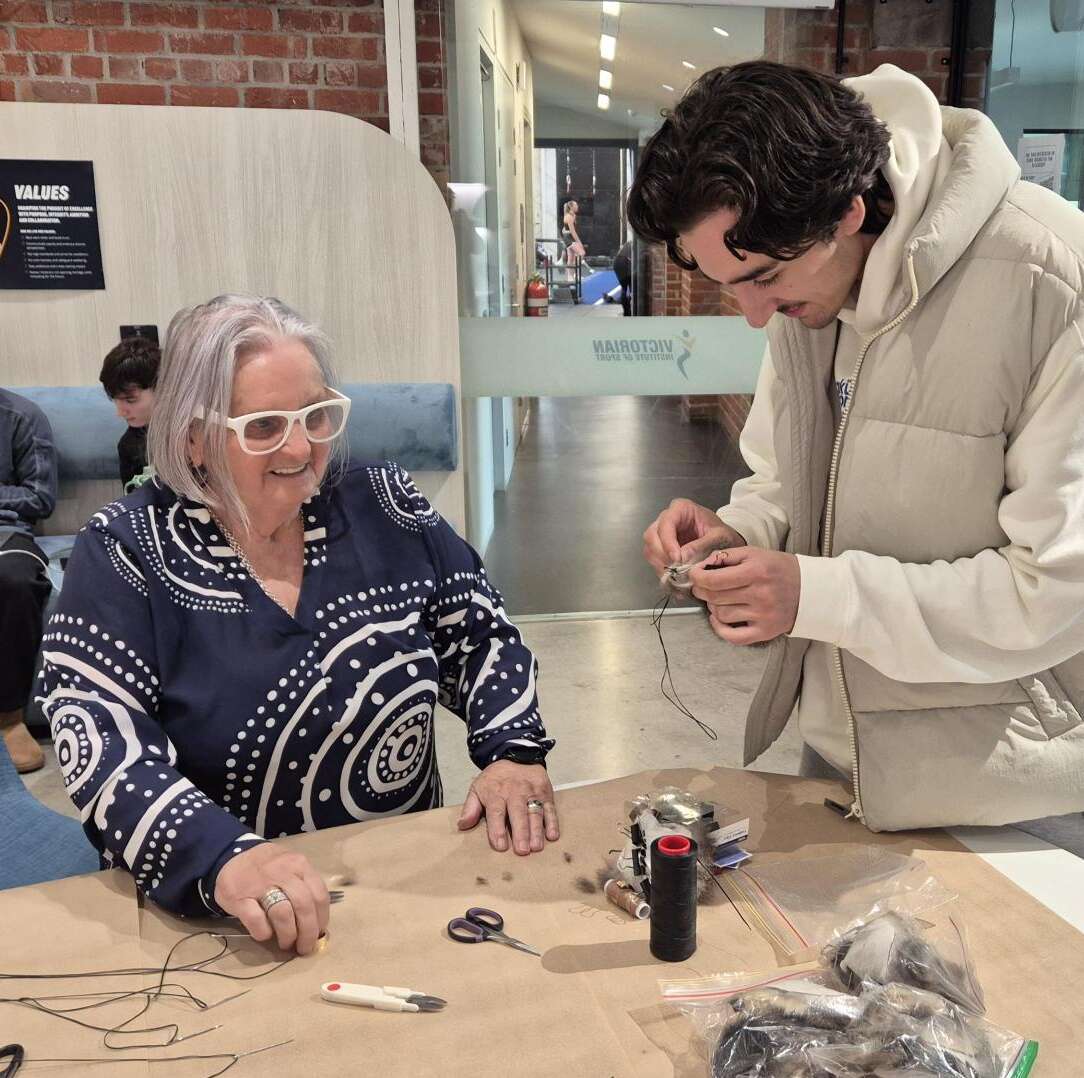
Aunty G and VIS athletes.
Making Marngrooks with Aunty G
Monday brought Wadawurrung Elder, Aunty G, into the VIS. Athletes from our combat sports programs sat alongside staff and stitched possum-skin panels into marngrooks, the traditional football used in the game that influenced Australian Rules.
Aunty G did not facilitate a craft activity. She brought Country into Lakeside Stadium. I watched athletes who compete at the highest level give their full attention to something that had nothing to do with their sport, and yet everything to do with it. Discipline. Patience. Craft. Those are not foreign values in a high performance environment. They are the same values.
Athletes took their marngrooks home. I kept one at the VIS as a permanent artefact. Both of those things matter. One sits in someone’s hands. The other sits in our history.
First Nations Ingredients in the Athletes’ Kitchen
Wednesday, I took over the athletes’ kitchen. Working alongside the VIS nutrition team, we prepared energy balls using native Australian ingredients, lemon myrtle powder and macadamias folded through a base of nuts and dates.
What athletes put in their bodies is a high performance decision, but it can also be a cultural one. The two things aren’t in tension. They never were.
Boorijin on the Sports Court
Friday’s staff sport activity became something different. Using the possum-skin marngrook made on Monday, I ran a version of Boorijin, a traditional First Nations game. Staff called it one of the most enjoyable sessions they could remember. The game sparked conversation whether it should be built into warm-up routines for our high performance sports teams. Someone wondered aloud whether we could be representing Australia in Boorijin at Brisbane 2032.
I told them I wasn’t ruling it out.
The Swimsuits
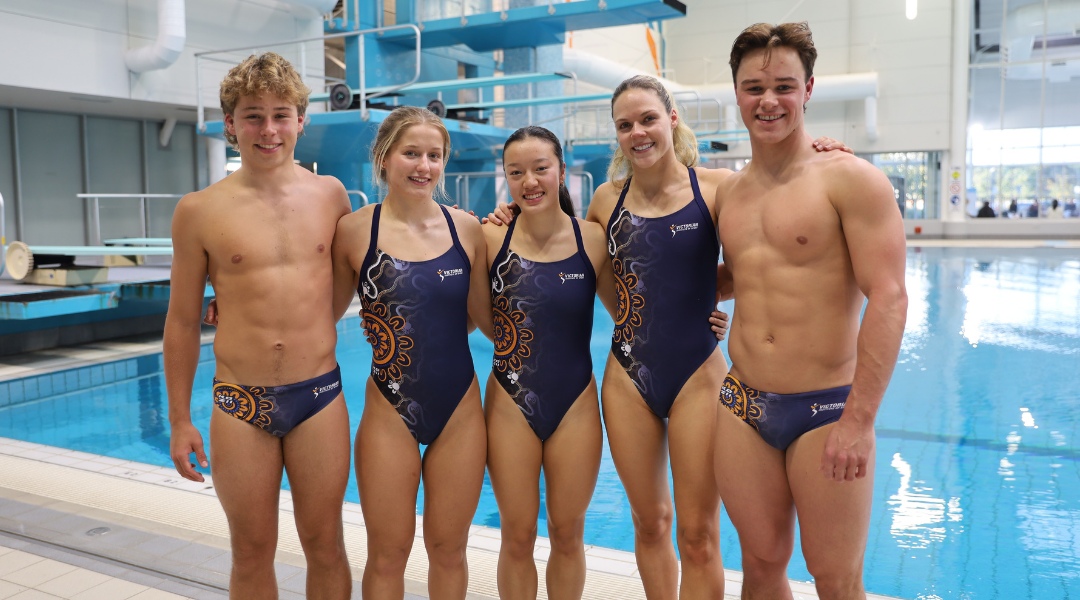
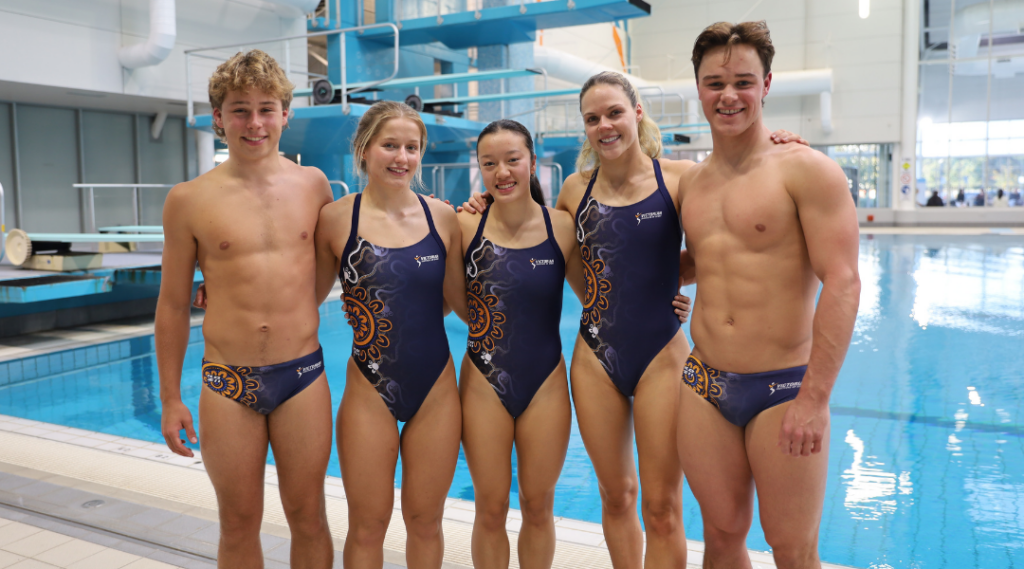
VIS divers wearing the new First Nations inspired bathers.
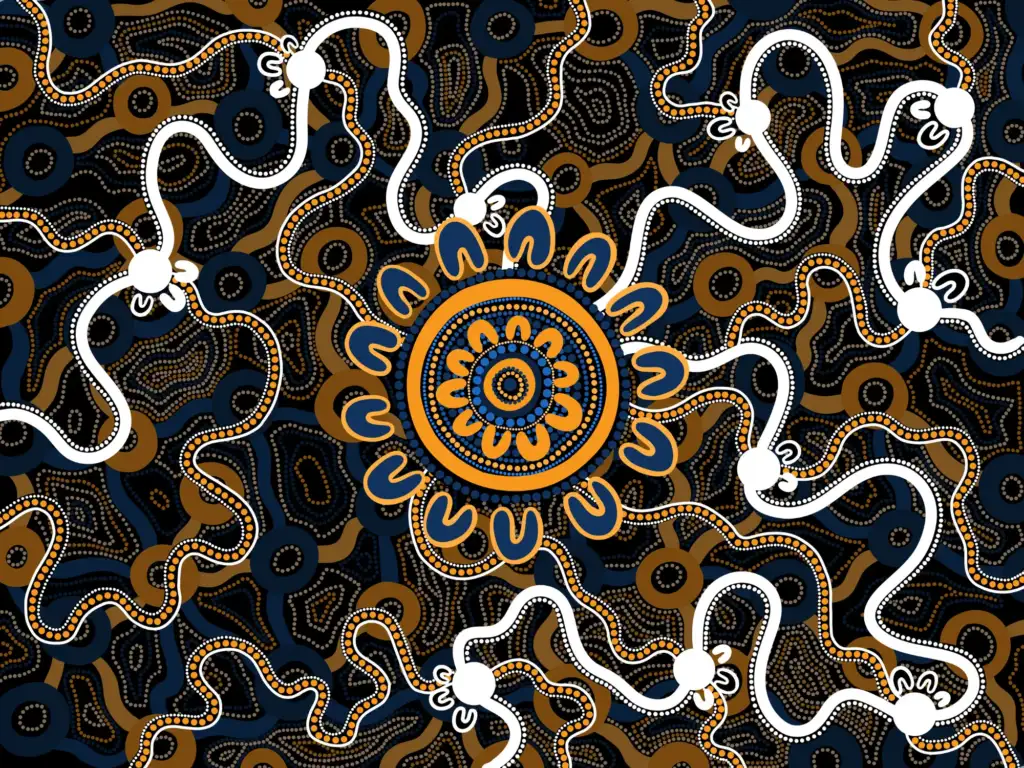
This is the one I want to say plainly: our VIS divers took the initiative to feature our VIS First Nations artwork on their new competition swimwear, without being asked.
Not prompted. Not programmed. Not something to be ticked off on a list.
I didn’t know it was happening until the idea was fully formed and we had athletes and staff invested in the project, excited to get production underway. When I found out, I had to sit with that for a moment. Because that’s the difference between compliance and connection. Compliance needs a reminder. Connection doesn’t.
That shift is the whole point of this work.
The AOC Stretch RAP Launch
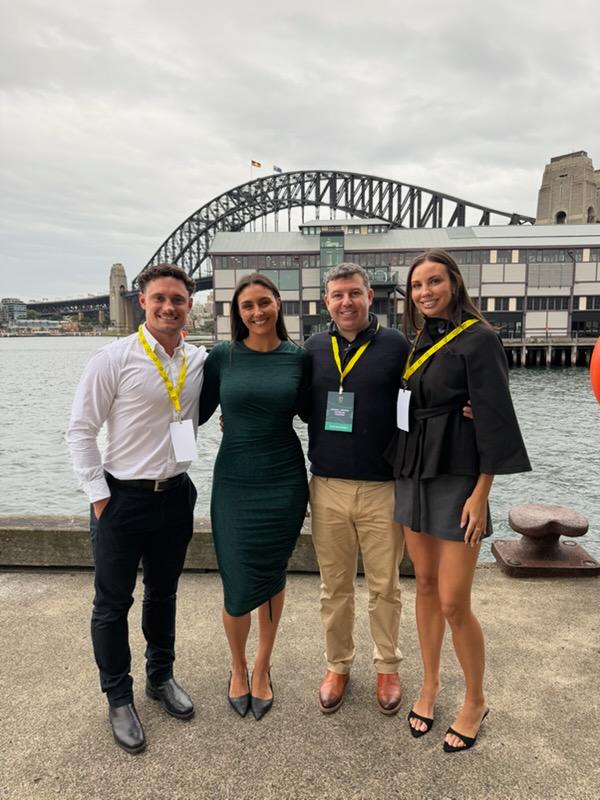
(L-R) BJ Oates Queensland Academy Sport, Tanisha Stanton Australian Sports Commission, Jamie McPherson VIS, Tay-Leiha Clark New South Wales Institute of Sport.
I was fortunate to attend the Australian Olympic Committee’s (AOC) Stretch RAP launch in Sydney, a gathering of First Nations Olympians and leaders that included VIS alumni Catherine Freeman, Kyle Vander-Kuyp, and Nova Perris as members of the AOC Indigenous Advisory Committee.
Being in that room, with that depth of history present, reminded me of something I already know but need to keep hearing: I am not doing this work alone. My brothers and sisters in Connection to Country roles across Australia’s national institutes are building the same thing from different ends. The national system is moving and growing. That room was proof of it.
What We Are Building
I want to be clear about what this week was, and what it wasn’t.
It wasn’t a set agenda, not a calendar obligation. It wasn’t diversity work.
It was a week inside a longer commitment to making First Nations culture a living part of how the institute operates, in the food athletes eat, the games staff play, the artwork on competition swimwear, the Elders in the building.
That commitment does not end on 3 June. It doesn’t get packed away for another year. It gets carried forward.
What’s Next?
Fifty years of NAIDOC. A month since Reconciliation Week. Neither date is where this work lives, it lives in the gaps between them, and this year at the VIS I watched people fill those gaps without being asked.
That doesn’t stop when the week does. If you’re working in high performance sport and want to build the same thing in your own organisation, reach out.