

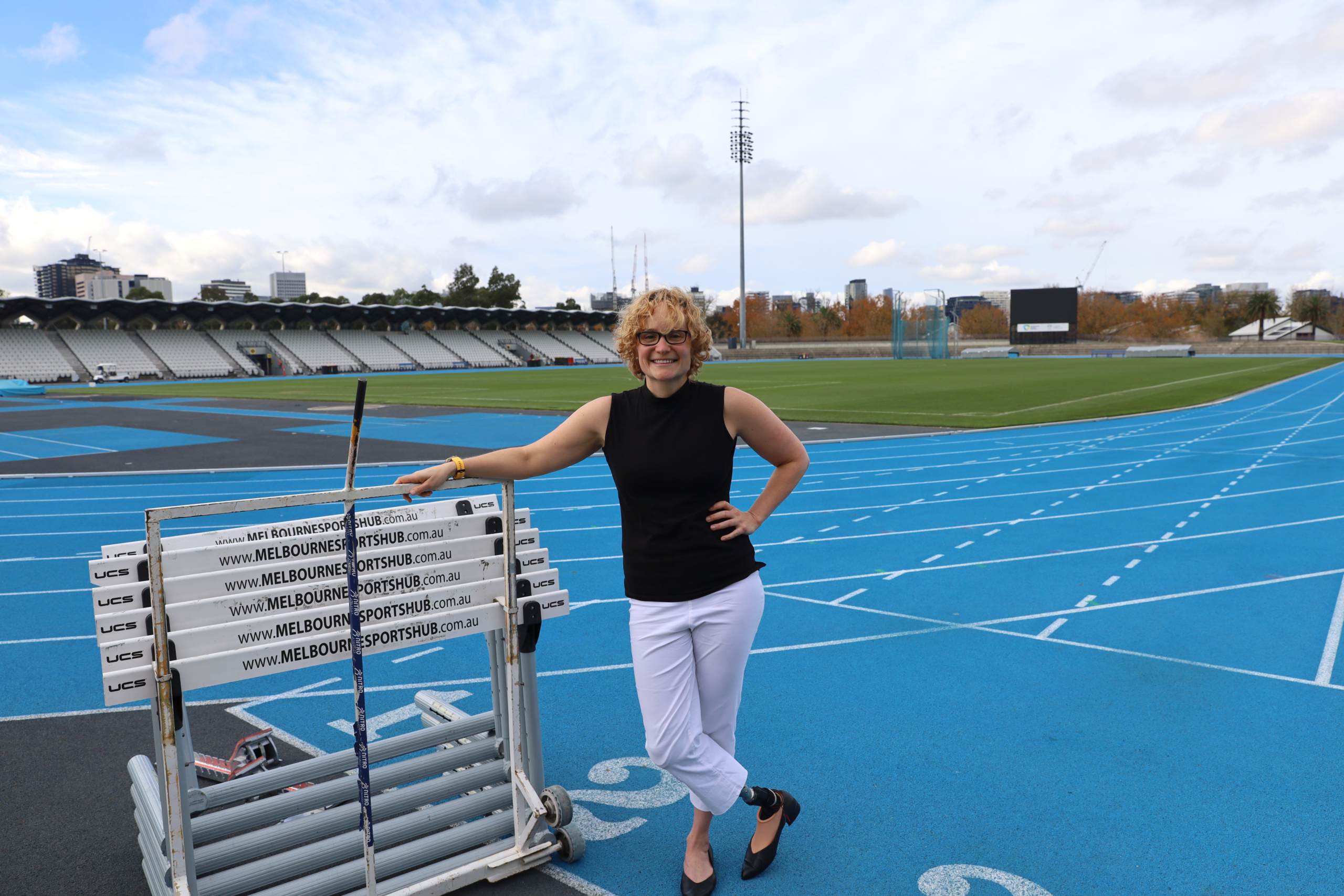
Hannah Macdougall PLY PhD was born without a right foot. She was told, as a child, she would never run.
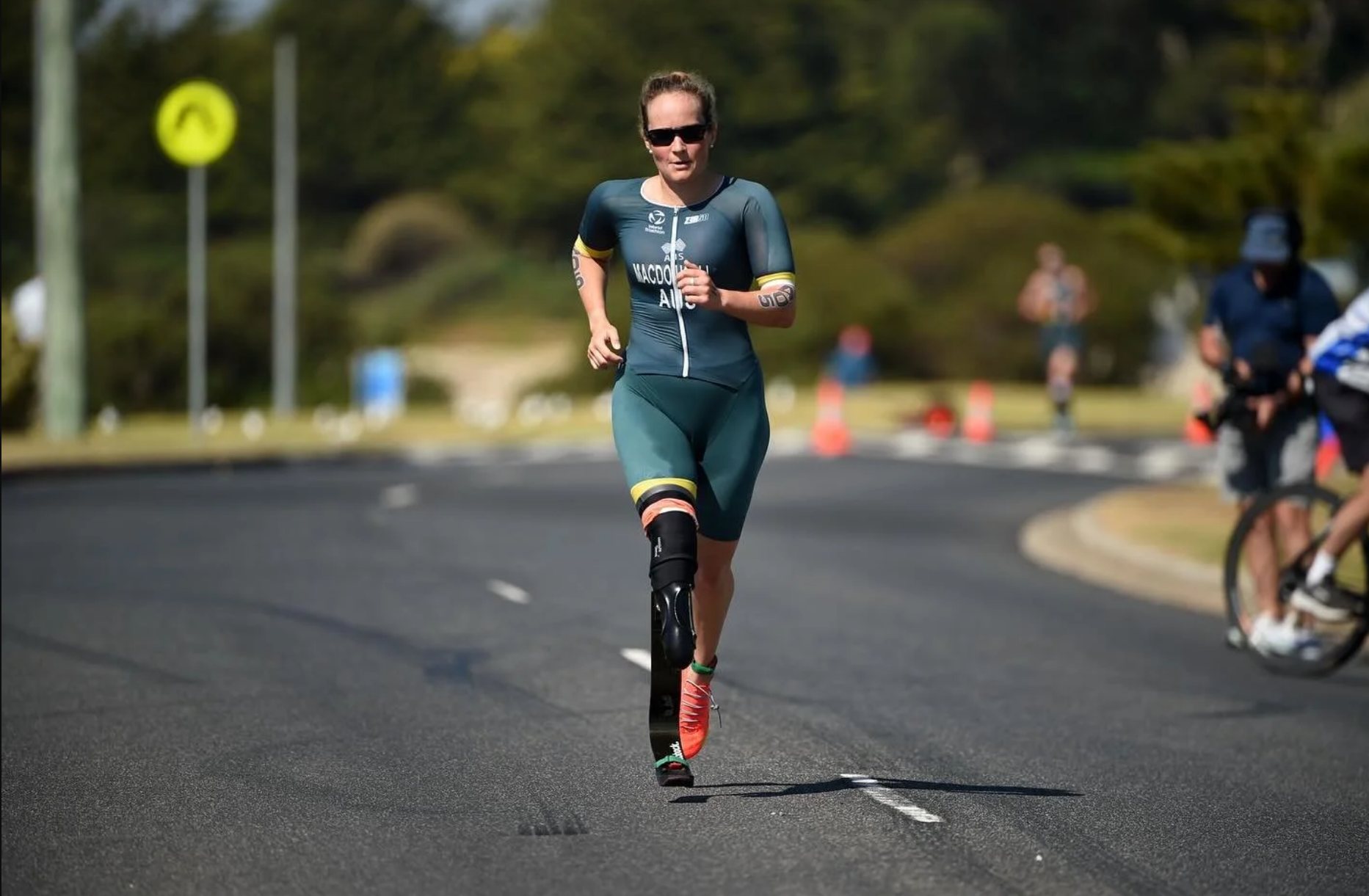
At the 2025 World Triathlon Para Championships in Wollongong, she ran 5km, on a prosthetic blade and leg she calls Julius Caesar, in front of her family, at her first home world championships, in her 28th year of elite sport.
Last month, the Victorian Institute of Sport (VIS) announced that Macdougall had retired from elite sport, bringing to a close one of the most remarkable careers in Australian Para sport history.
Between those two moments sits a lifetime of achievement: three sports, two Paralympic Games, seven World Championships, a world record, a PhD, and a career built entirely on refusing the version of the story someone else had written for her.
The Swimmer
Macdougall started in the water. Competitive swimming from 1997, classified S10, rising quickly through junior ranks. By 2002 she had broken the S10 women’s 50m backstroke world record and won two gold medals at the FESPIC Games in Busan.
The Athens 2004 Paralympic Games came with a bronze in the 4×100m medley relay, a fourth in the 100m backstroke, and a story she still tells in her keynote workshops: one week before the opening ceremony, she dislocated her kneecap. She competed anyway.
The Beijing 2008 Paralympic Games followed. She co-captained the Australian Paralympic Swim Team at both Games and at the 2006 IPC Swimming World Championships, a leader in the pool as well as a competitor in it.
Then, slowly, the system that had built her began to cost her.
Burnout. Shoulder injuries, months of rehab, and in 2009, she stepped away from the sport she had loved since childhood.
But her story would not end there.
The Cyclist
The pivot to Para cycling was not a consolation. It was a reinvention.
After just three weeks of cycling training, she won two gold medals at the Victorian Championships and followed it four weeks later with two silvers at the Australian Para Road Cycling Championships.
From 2015 to 2019, she accumulated two World Cup golds, five silvers and three bronzes across C4 road race and time trial events on the UCI Para Cycling circuit.
She added silver medals at the 2018 UCI Para cycling Road World Championships in Maniago, in both the women’s time trial and road race.
Through all of it, she was completing a PhD.
Her thesis, submitted to La Trobe University in 2017, examined athlete wellbeing. The subject was not abstract. It was drawn directly from what she had experienced as an elite athlete, the pressures, the inclusion gaps, the moments the system looked past the person to see only the performance.
She calls herself a “pracademic.” The research and the lived experience are not separate bodies of work. They are the same argument, made in two languages.
The Triathlete
When cycling wound down, she pivoted again. To Para triathlon from 2022. PTS4 classification.
She won the Oceania Championships in 2022. Her first World Cup victory came in Málaga in 2023. Medals accumulated on the World Triathlon Para circuit across cups, series and Oceania events.
Then Wollongong.
The 2025 World Triathlon Para Championships, bronze, PTS4, in Australia, at her first home world championships, 28 years after she began. Her family was there and the VIS staff who had been in her corner since 2002 were cheering her on from back at the institute in Albert Park.
“My first ever home world championships in Wollongong in 2025 was a very special moment,” said Macdougall.
“Being able to share the experience and podium with family, friends and the Aussie crowd meant the world.”
A child told she would never run. Running 5km on home soil at a world championships, in her fourth decade of elite sport.
Some moments take the whole career to arrive.
Threading it Together
Alongside every training block, every selection trial, every international campaign, Macdougall was building something harder to measure.
A double degree at Deakin University. A PhD at La Trobe. Roles in emergency services, mental health and suicide prevention, performance wellbeing at the VIS, player development at Melbourne Football Club. Keynotes. Workshops. A speaking practice anchored in the kind of story that only comes from having been inside the system you are trying to shape.
Not all at once, she is clear on that, but all within the same career, threaded through 20 to 30 hours of training a week.
“High performance sport is about more than medals,” said Macdougall.
“It’s about threading wellbeing and elite sport together in a way that allows athletes to thrive in sport and in life.”
VIS CEO Nicole Livingstone AO OLY said Macdougall had brought something special to the VIS over her extensive time with the institute.
“Hannah has brought her whole self to sport, as an athlete and advocate, and that has helped shape a stronger, more inclusive environment for everyone around her,” Livingstone said.
“She is a powerful example of what it means to build a career in high performance sport and then use that experience to give back.”
What Remains
Macdougall joined the VIS in 2002 as a teenage swimmer with a world record. She leaves in 2026 as something the high performance system spent 28 years learning, slowly, to build around its athletes, a person who understood that performance and wellbeing are not competing priorities, but the same one.
“The Institute has been an integral part of my life,” she said.
“Helping shape who I am as an athlete, but more importantly, who I am as a human.”
The stumps are drawn. The ride is over, the wave has broken, the run has stopped.
But a child who was told she would never run just keeps going.