

VIS HR Administrator Imogen Barnett reflects on her first steps in Auslan
Most people at the VIS know me from HR, and some know I also play AFLW for Collingwood. In HR, a big part of my role is helping make the VIS a workplace where everyone feels welcome, heard and able to do their best work. I care a lot about that, but caring about inclusion and knowing how to practise it day to day aren’t always the same thing. Sometimes we don’t know what we don’t know.
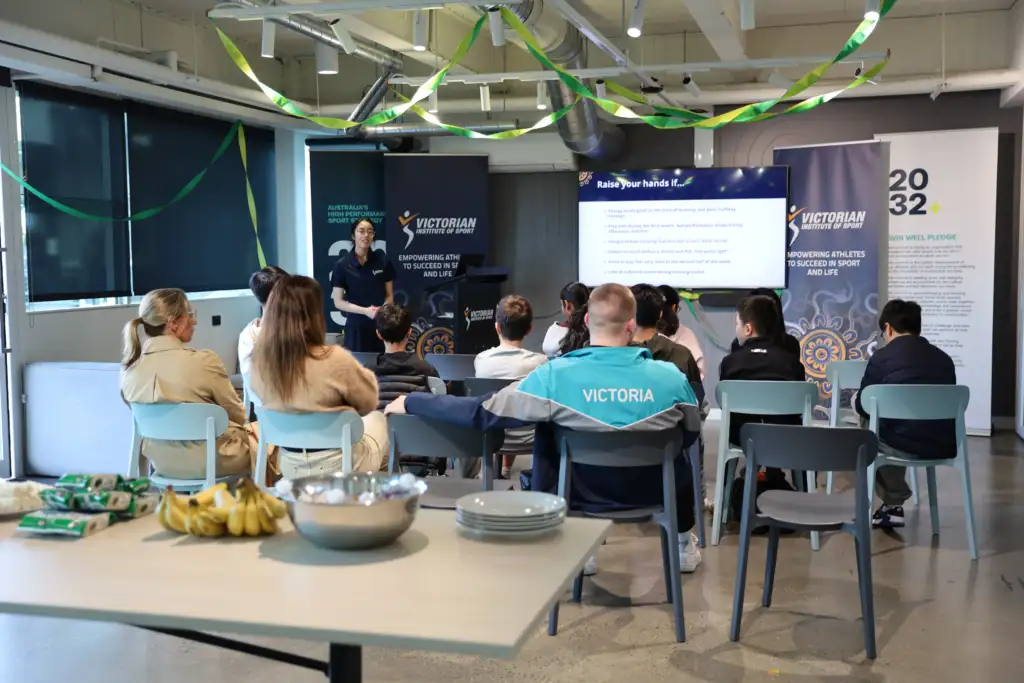
That’s why I signed up for a two-hour Deaf awareness and communication workshop. I expected some useful tips. I came away with a better understanding of how I communicate, and my first few signs in Auslan.
The message that has stayed with me most is that Deaf and hard-of-hearing people are not one group who all communicate the same way. Everyone has their own preferences. Rather than assuming, the best thing we can do is ask: how do you prefer to communicate?
Our first lessons in Auslan
Most of the session was spent learning Auslan. We started with the fingerspelling alphabet, then greetings, some everyday signs and a few sports signs. Football was one I made sure to learn.
We then practised introducing ourselves with our name, our job and our favourite sport. It took real concentration and there was plenty of laughter in the room as we worked through our mistakes. On the footy field I read my teammates’ body language without thinking about it, but here I had to focus on every handshape. Being a beginner again was a good reminder of the patience and confidence it takes to communicate in a language you’re still learning.
We also learnt that Auslan is a complete language with its own grammar. It isn’t a signed version of English, and facial expressions and body movement are an important part of how meaning is shared.
What I’m taking back to work
Two hours isn’t enough to become fluent, and that was never the aim. The session was about awareness and a willingness to keep learning.
I’m practising the fingerspelling alphabet, and I’m thinking more about accessibility when I plan meetings and send out communications. In HR we’re often someone’s first contact with the VIS, so I want inclusion to be part of how I work from the start, not something considered afterwards.
So, my challenge to my VIS colleagues, and to myself, is to learn one new sign this week and use it. Greet someone, say thank you or spell your name. It might feel unfamiliar at first, but being willing to try is a good place to start.