



How can Australia’s high performance sport system embrace the world’s oldest living culture? At the 2025 World Class to World Best conference, leaders explored bold ways to embed First Nations values for lasting impact. VIS Connection to Country Officer, Jamie McPherson, shares his insights from the conference which sparked powerful conversations.
Reflection by Jamie McPherson, VIS Our Connection to Country Officer
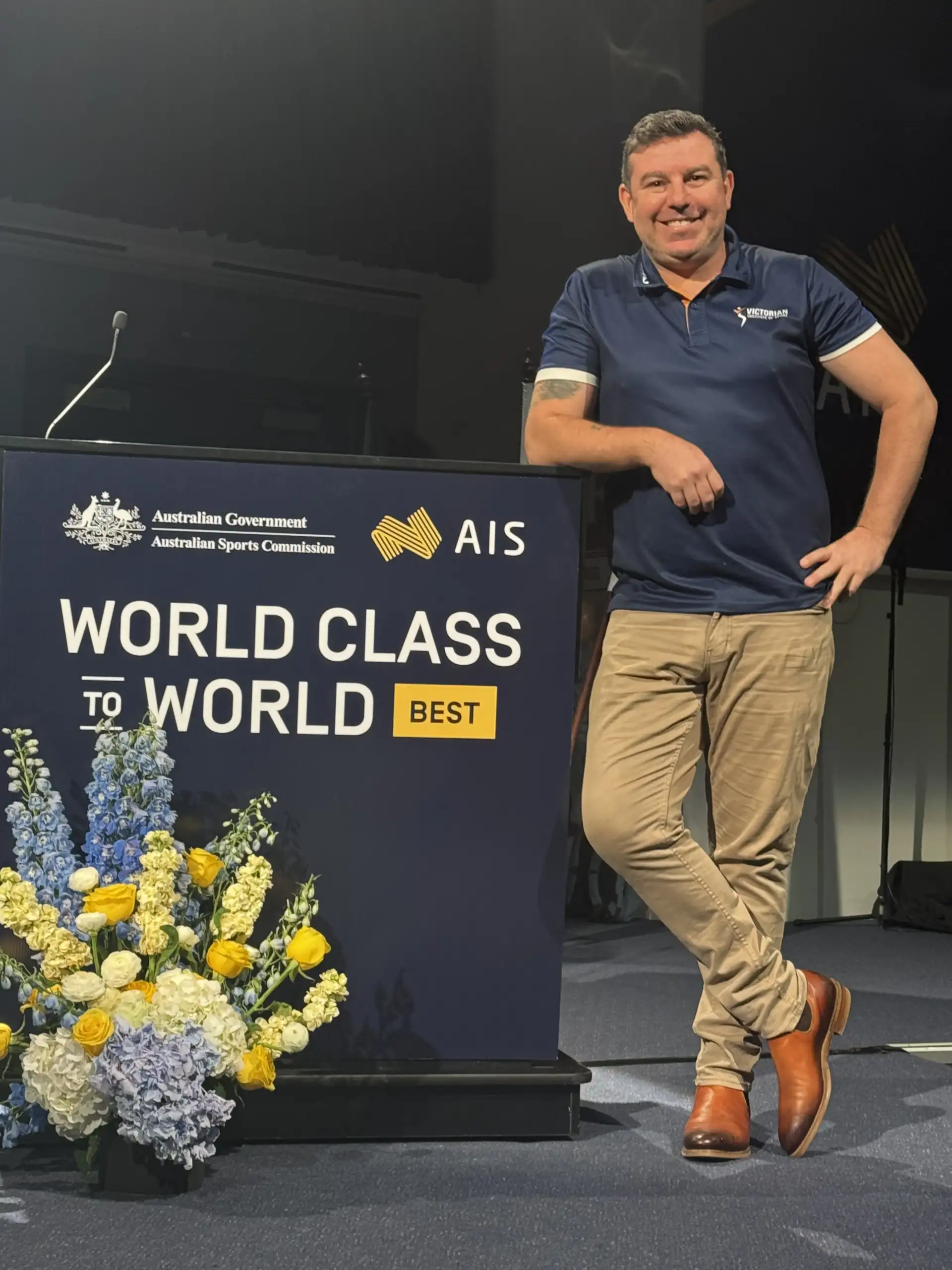
Last week I had the pleasure of presenting at the 2025 World Class to World Best conference, which brings together leaders from across Australia’s high performance sport system to network, learn and collaborate on how we can keep improving performance and achieving sustainable success.
This year’s theme was grounded in the core values of the Win Well Strategy – Excellence, Courage, Belonging and Connection. I was proud to speak to the connection piece from the perspective of the oldest living culture on earth as a proud Wadawurrung man.
I joined fellow Connection to Country Officers BJ Oates (Queensland Academy of Sport) and Taylor Wigg (Tasmanian Institute of Sport) on a panel moderated by Tanisha Williams, Engagement Adviser at the Australian Institute of Sport.
Our aim was to show leaders from across the system what we’ve already achieved in a short space of time, and to spark conversations about how they can embed First Nations culture within their own organisations.
Could that be achieved in just 30 minutes? Not quite – we definitely went over time. But that was because we wanted to make sure our messages were nuanced, honest and thought‑provoking.
We were fortunate to receive some outstanding questions from the floor, including from our own VIS CEO, Nicole Livingstone AO, who asked how we can better support athletes outside traditional categorisation.
There was also a powerful question from Paris 2024 Chef de Mission, Anna Meares OAM, about the fear that can sit around embracing First Nations culture.
My brother in this work, BJ, answered beautifully by reminding everyone that we are all Australian, and that as First Nations people we want you to lean in and embrace our cultures.
For me, that moment created a key takeaway: as my Tasmanian sister Taylor said, we need people to be brave and be bold.
Personally, the conference was a valuable opportunity to show leaders across Australian sport that we can embed First Nations culture in many ways, including visible representation, to create culturally safe environments. The world’s oldest living culture is also our shared culture as Australians, and it’s something we should celebrate and embrace.
I hope leaders took away my message that First Nations projects cannot be one‑offs, and that the decisions they make today should benefit not only the current generation, but future generations as well.
I’m optimistic that, over time, we’ll continue to see meaningful change in our high performance system and real progress towards a culturally safe space for all First Nations athletes.