


By Chris Burke, VIS baseball athlete
Ohtani will no doubt go down as one of the best players to ever play the game. I told myself, you can go out there and watch three rounds of his batting practice and be a little kid watching it, be in awe, soak it in. However, once those three rounds of batting practice are finished, that’s it. You no longer look up to him. If you’re going to beat him, you’ve got to see him eye to eye.
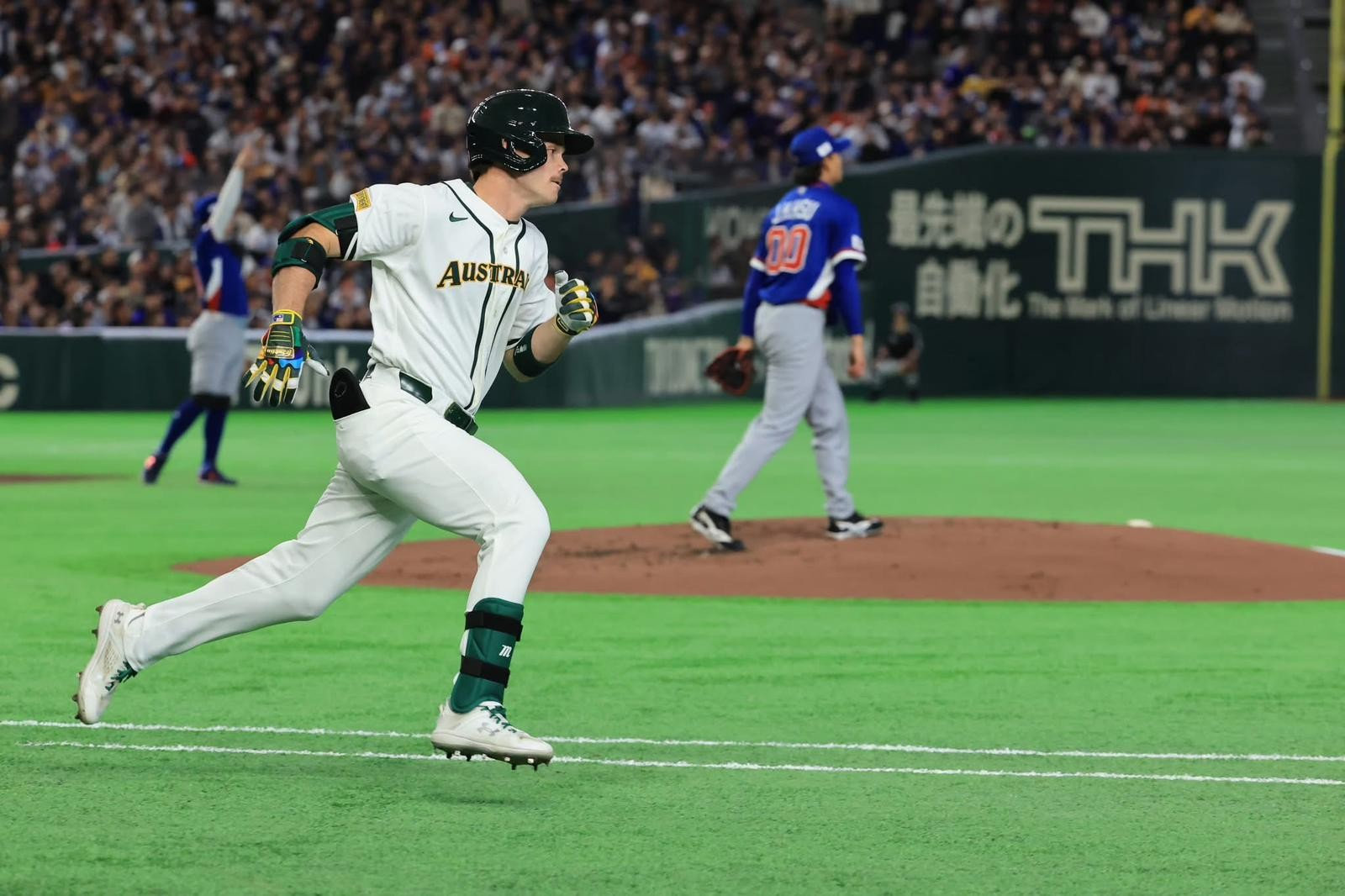
VIS baseballer Chris Burke sat down to reflect on representing Australia at the World Baseball Classic, running out in front of a sold-out Tokyo Dome, holding Shohei Ohtani hitless, and the support that helped get him there.
What was it like pulling on the Australian jersey and stepping onto the field at the World Baseball Classic?
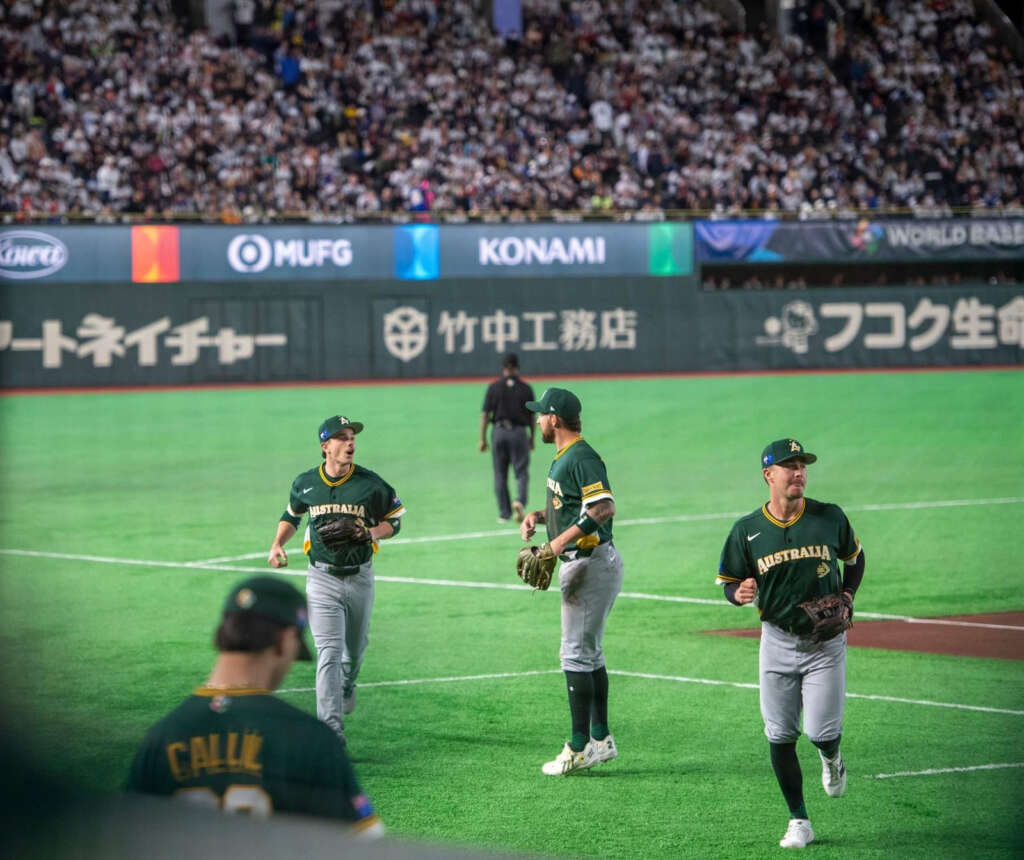
Before game one against Taiwan, I was in the clubhouse by my locker waiting around, listening to music and talking with the other players, all of us joking around having a good time. Then it was time to suit up. I’d heard stories from the older players about how special it is putting the men’s national team jersey on for the first time and the feelings you get when that moment comes. Sure enough, when it was time to put the uniform on, I grabbed my jersey, looked at it, and I’ve never felt so many different emotions at one time.
Gratitude was the biggest emotion that flooded me, thinking about everyone who has helped get me to this point. From my family and loved ones, to the parents who’d work in the canteen at the field selling me my hot dogs and Gatorades when I was 10 years old, to the volunteers who’d make sure the fields were ready to play all throughout my career. I thought of everyone who has made an impact on me, and the goosebumps that went through my body solidified how much this baseball community means to me.
When it was time to go, I grabbed my equipment and started heading up the tunnel towards the field. The stadium was sold out, the place was loud, and the game hadn’t even started. I went through my warmup on the line and honestly couldn’t stop smiling. I kept thinking, “how good is this.” The dream I’d had since I could first remember was to represent Australia at the highest level, and here it was.
As they announced the teams onto the field, the nerves made it real and reminded me how much I care about this team, this community, and those who have come before us. Hearing the small pocket of Australian fans cheer for us made us feel unstoppable. When I was standing out in left field, the switch flipped. It was time to compete.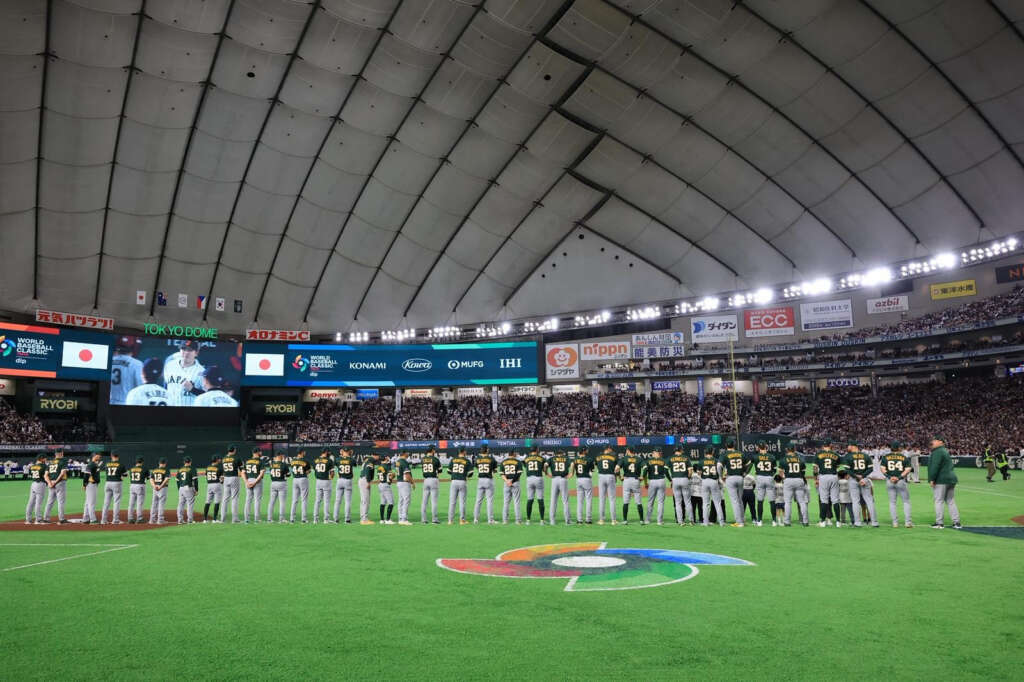
How does the intensity of the World Baseball Classic compare with other competitions you’ve played in?
The intensity of every game and every pitch was at a level I had never seen before. Every pitch mattered. Every situation was bigger than the last. Being in a sold-out stadium where 95 per cent of the crowd was hoping you lose only amplified each situation. What really helped me control this intensity was the preparation we had in our pre-camp in Fuchu, Japan. Our coaching staff put us players in situations every day to help us get comfortable with big scenarios and almost learn to thrive in them. That’s what helped me slow the game down and compete to the level I knew I could.
Japan is known for having some of the most passionate baseball fans in the world, what did that atmosphere feel like as a player?
The atmosphere was ridiculous. The way I’d put it: it was like putting on noise-cancelling headphones, turning the volume to max and listening to chants for three hours straight. Nobody knows how you’ll react to a situation like that until you’re thrown into it. For me, I found the louder it got, the more soothing it was. Hearing the silence when we got the win over Taiwan in game one is something I’ll cherish for the rest of my life, the only happy faces in that sold-out stadium were the Aussies. We loved it.
Shohei Ohtani is arguably the biggest name in baseball right now – what was it like preparing to face him?
Ohtani will no doubt go down as one of the best players to ever play the game. Pre-game was when most of our team went out to watch his batting practice, and watching him hit was on another level. Each swing was effortlessly hitting halfway up the scoreboard, with some balls going through the lights, just absolutely insane.
I told myself, you can go out there and watch three rounds of his batting practice and be a little kid watching it, be in awe, soak it in. However, once those three rounds are finished, that’s it. You no longer look up to him. If you’re going to beat him, you’ve got to see him eye to eye. That’s the mentality I believed I had to have, and I believe every one of my teammates had the same, because we kept him to zero hits, and we didn’t let him beat us.
From a player’s perspective, what makes Ohtani so difficult to compete against?
The fact that he’s not human. For someone to be so good in all aspects of the game is incredible. Being able to hit balls over 450 feet then go out and throw 100 mph (160 km/h) is something no one has been able to do in the game before. Something I take away from his game is the poise he has. Ohtani makes every moment seem smaller than it is. He keeps his emotions even throughout the game, and very rarely do you see them come out. That consistency is what makes him so difficult to compete against. If he gets out two times in a row, you’re sitting out there looking around thinking, alright, when’s the big hit going to come? He keeps his lows and highs to a minimum, which lets him play the game free and to the level he can, day in, day out.
What did you learn about yourself as a player during the World Baseball Classic, and how did you feel you performed?
I learnt that no matter the country you’re playing in or the team you’re playing against, it’s all the same game – the same game I fell in love with as a kid. When I bought into this and kept my mind clear from a “I hope I play well” or “don’t screw up” mentality, it allowed me to play free and enjoy the game and the atmosphere for what it was. I was able to play on my own terms, play to my strengths, and help our team win.
When I got selected, I sat down with myself and was brutally honest about why. I didn’t assume I was going in as a starter, whether my role was a late defensive replacement or a pinch runner, my mindset was that I was ready for the occasion. During pre-camp I earned a starting position, and hearing that I’d be starting was incredible. Having more of a chance to impact the game and help my country win was all I could think about. I’ll take a lot from this experience, particularly around mindset, and keep looking for ways to improve and help get us over the line in future tournaments.
How did the VIS help with your preparation for the tournament?
Without the VIS, I’d be miles behind where I knew I needed to be in order to get selected. The environment when you walk in the door at the VIS is rare, a raw mix of competitiveness and a shared attitude to succeed. It’s impossible not to train as hard as you can when there are countless other athletes with ambitions similar to mine working out right next to you.
During the year, my two Physical Preparation Coaches, Ben King and Hana Glasgow-Palmer, created an environment that pushed us to our limits while still keeping it loose and keeping it simple. I was able to sit down with them and talk about what areas I wanted to improve, and we attacked it straight away. The program they put together was a mix of strength building and speed improvement, and without them I know I wouldn’t have seen the jump I did. The size and speed gains I achieved were no doubt a big reason for my selection, and I’ll be forever grateful to them.
Kane Spagnolo (Physiotherapist) kept me on the field throughout the year, helping me both push my body and rein me in when needed, so I could get back to doing what I love.
Lou Cato (Sports Dietitian) and the nutrition team were great in the lead-up to the event, with weekly check-ups I’m extremely grateful for. There aren’t many places that care so much about keeping your body and mind healthy so you can compete to the best of your ability.
Aimie Rocci, my Performance Lifestyle Advisor, has been amazing – helping me take care of off-field life so I could focus on the tournament and take care of business.
My biggest takeaway from the nutrition team (and from our CEO, Nicole Livingstone) was to stay away from food market dumplings. My last encounter with these devils knocked 8kg off me within the week, so I’m glad I got told to stay well clear of them for my WBC tournament, no matter how good they looked.
The VIS is special, and I’m extremely grateful to be a part of the VIS family.