


What able bodied athletes stand to learn when they step outside their own game.
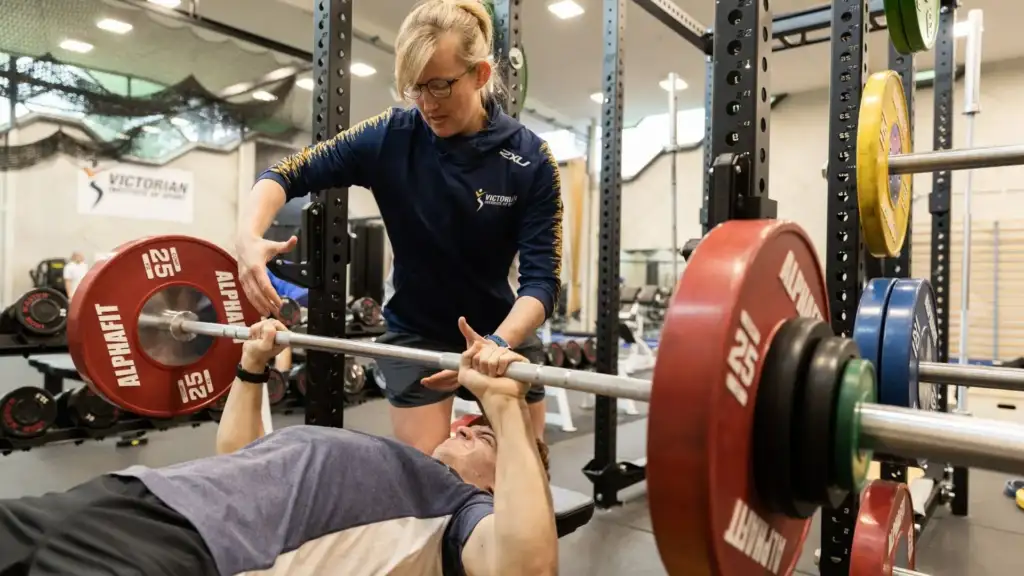
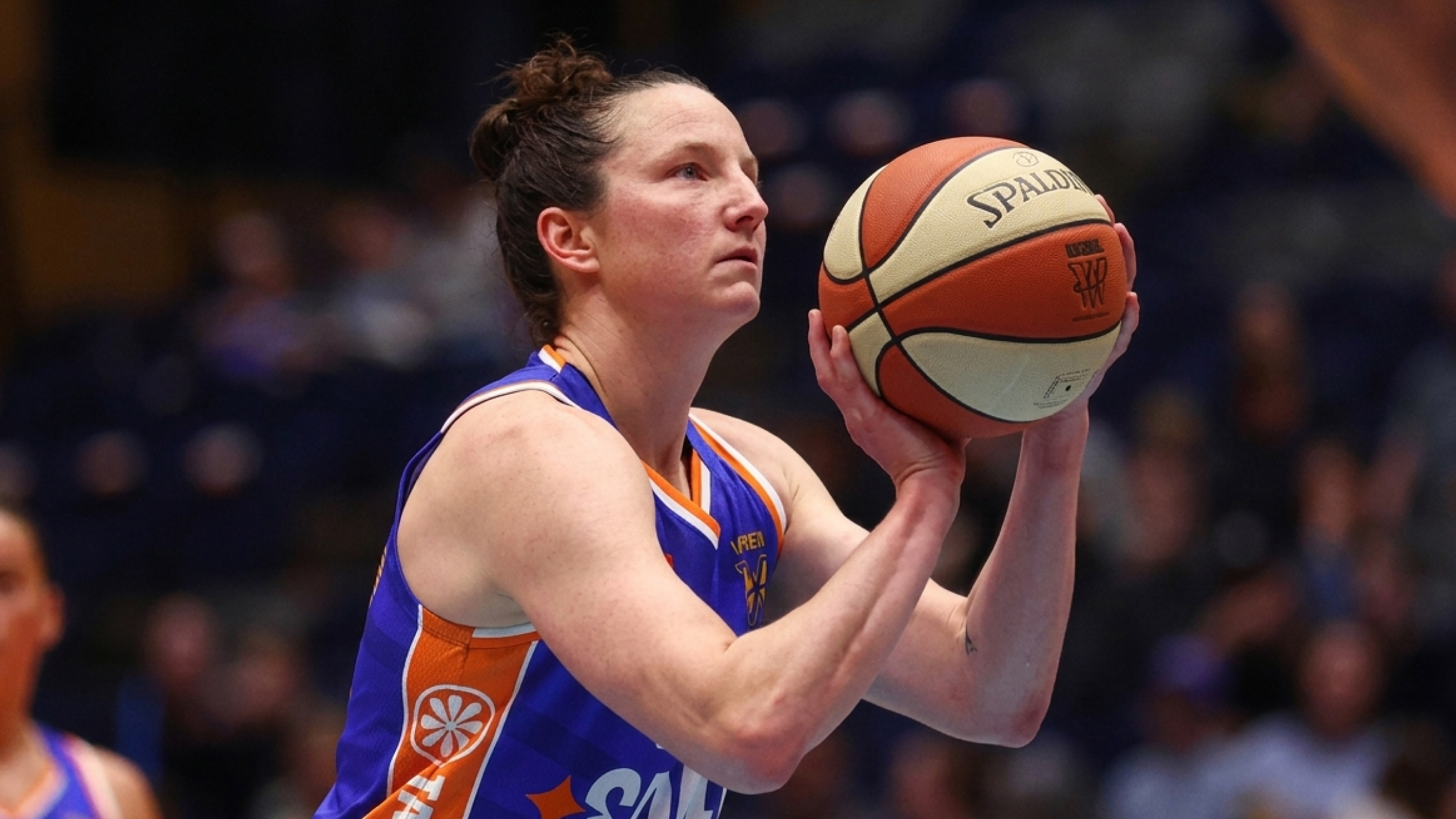
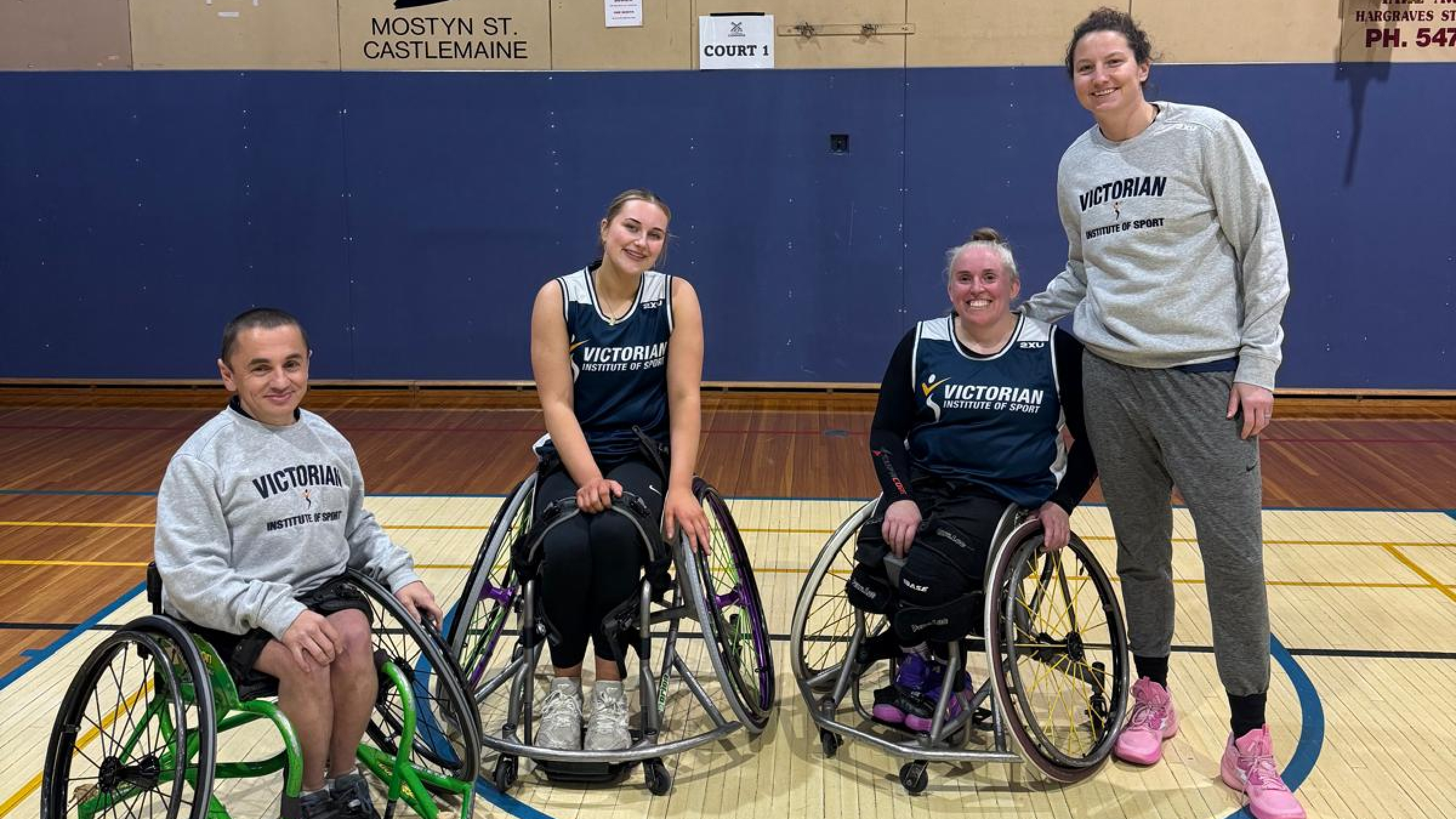
Kelsey Griffin has spent more than 20 years playing professional basketball, including college ball at Nebraska and five seasons in the WNBA, before building the bulk of her career in the WNBL, currently as a forward with the Bendigo Spirit. In the past few seasons, she has embarked on a new challenge alongside basketball: she is now a Victorian Institute of Sport (VIS) shooting coach and an assistant coach with the Gliders, Australia’s women’s national wheelchair basketball team. Two extraordinary careers, running parallel.
Born in Anchorage, Alaska, Griffin built her college career with the Nebraska Cornhuskers before being selected third overall in the 2010 WNBA draft. She has since won multiple WNBL championships with Bendigo and Canberra, earned league MVP honours, and represented Australia internationally after gaining citizenship in 2015. It is a career built almost entirely inside one sport, which is part of what makes her second venture so intriguing.
Wheelchair basketball is one of the fastest growing sports for athletes with a disability, and Australia has long been a leading nation in its development. Griffin now coaches under Jeremy Synot, a VIS staff member recently appointed head coach of the Gliders – an opportunity she describes as something she still marvels at.
“My journey to wheelchair basketball coaching and being a part of the Gliders staff is an incredible set of circumstances that came together to afford me this opportunity,” she says.
It began with Harriet Caldwell, an emerging wheelchair basketballer who, after being offered a VIS scholarship, reached out to Griffin in search of a coach. Griffin’s first instinct was to doubt whether she was the right person for the job. “I wasn’t too sure how much I could actually offer,” she admits. It was Synot who encouraged her to try anyway. “He said he wanted to interview me and assured me that he would help give me some direction around what Harriet needed. I just didn’t want to be bad at the job.”
Her first session on court became something of a turning point, a sport she had known for two decades suddenly asking to be understood in a completely different way. “It was just the coolest thing ever to see this sport that I had been a part of for over 20 years through a different lens, and one where I had so much to learn.”
Starting again, on purpose
Griffin credits established figures in wheelchair basketball, among them Paralympian Shelley Matherson, with helping her find her footing in those early months. “She reassured me to just go out, have a crack and then we’d work it out.”
There is a particular kind of honesty in how Griffin describes that period, holding real command of the game in one sense while genuinely starting from nothing in another. She calls it a paradox; one she says she has rarely encountered elsewhere in her life. It also brought old insecurities to the surface, shaped by her own experience of being coached by people she felt had not always matched the level they were coaching at. She was determined not to become that for someone else. “I had a lot of my own insecurities and baggage. I didn’t want to be that person that came in with authority but didn’t understand the game.”
What changed her outlook was being seen for something separate from her playing career altogether. “This was the first time I’ve been in an environment where a coach saw this skill set that I was passionate about and that had very little to do with my basketball skills, but more my approach to basketball. I just felt really valued and seen.”
Knowing where her knowledge ends
Griffin is clear eyed about what carries across from her playing career and what does not. Shooting mechanics, ball handling and reading angles transfer cleanly. What she cannot offer from personal experience is what it feels like to play the game in a chair.
“Because I’m so bad in a chair, to be able to teach something that I haven’t physically mastered is quite difficult for me,” she says. “It’s having great relationships with players to talk to them about how it feels or what movement happens, or when Macca (Matthew McShane) and Jeremy are teaching something, I’m cued in just as much to understand what they’re trying to accomplish.”
That honesty has reshaped how she thinks about coaches from her own playing days. “It has helped me to have more empathy for my coaches, to give them more grace for not picking up on things or seeing things how I see them. I probably didn’t quite grasp the gap that potentially exists between coaches who haven’t played at a high level and coaching at a high level by working through development pathways.”
Some of her most vital lessons have had little to do with basketball technique at all. A trip to Repechage, an international qualifying tournament in Madrid on the Gliders’ pathway to the World Championships, opened her eyes to the sheer logistics wheelchair athletes navigate at the elite level, from travelling with two sets of chairs each to negotiating hotel rooms and change rooms never built with them in mind. “Not only are these athletes excelling at the highest level in the world in their own sport, but they’re also navigating stuff that I wouldn’t even think about day-to-day in a new environment. I think the resolve and ability to just get on with things is super, super impressive.”
What she hopes to give the team
Ask Griffin what she wants to bring to a Gliders squad built on the legacy of decorated Paralympians, and her answer has little to do with tactics. “A level of appreciation and recognition for what they are doing, what they’ve done, who’s come before them, a connection that they can have with each other, a way to compete that celebrates each other’s successes, and just this incredible experience of getting to represent Australia.”
“Whether it’s one camp or whether it’s a career that spans decades, that they felt a sense of belonging and accomplishment with a group of elite athletes that got to put on the green and gold.”
On the pathway from player to coach
Griffin’s experience has left her with strong views on how athletes move into coaching more broadly, and who tends to be overlooked along the way.
“There’s a misconception that because you’re a great player, you’d make a great coach, and I don’t actually think that’s true.” Some of the best coaches, in her view, were never the standout on court. They might be the player who “ran an incredible practice squad or were a backup, maybe only played 10 to 15 minutes their whole career but have this great understanding of the game and the pieces that are required to make things work, and the dynamics at play and the management of personalities.”
She points to self-awareness as one of the most underrated qualities in a coaching staff. “Putting people around you who fulfil the deficits that you have, because no one person has all of the things that it takes to be a great coach.” It is a balance she credits Synot with building deliberately from the start. “That’s what makes Jeremy so special – he knows his strengths. He knew my strengths, he knew Macca’s strengths, and he was able to bring this really balanced perspective to the coaching staff.”
For Griffin, that kind of balanced coaching staff should be the model more broadly, a shift away from valuing titles and long-playing careers above all else. “Great people managers, great communicators, have a thorough understanding of the game, growth mindset, want to learn, want to expand, those who work well with uncertainty.” These make up part of a matrix of qualities Griffin believes exists in many athletes.
“Instead of chasing after great players, I think it’s actually chasing after great people who want to make others better.”
Looking to Ottawa
The Gliders now turn their attention to the World Championships in Ottawa in September, the sport’s top international competition, arriving after a demanding year that has included athlete commitments across national leagues and recovery from the 2026 Commonwealth Games. For Griffin, getting the squad ready is about more than physical preparation.
“There’s all of life that comes into it and what’s going on with each individual’s life and where they’re at. We’ve got some that are still in school. We’ve got others that are working, parenting, all a broad spectrum of life circumstances. For me it’s about looking at the whole athlete, what their needs are, and making sure that heading into Canada we’re in a place of physical preparation, yes, but also mentally wanting to be there excited, refreshed, energised and not feeling burdened and heavy.”
A parallel worth watching
What comes through most in speaking with Griffin is not a story of one career giving way to another, but of what has been possible by holding both at once. Her playing legacy with the Spirit continues to grow and alongside it sits a coaching career shaped by her own willingness, in her words, to continue learning the game.
That willingness is, in the end, the argument Griffin’s story quietly makes for a pathway to coaching rather than a postscript. Athletes moving into coaching roles are usually framed as something that happens once a playing career winds down – Griffin’s experience suggests otherwise. She is still playing at the highest level while learning to coach at one, and neither pursuit appears diminished by the other. If anything, each sharpens the other, her playing career lending technical grounding, her coaching role lending a harder won understanding of what it takes to develop an athlete.
For a sport still building its pipeline of coaches, and for a institute like the VIS invested in producing them, that overlap matters more than a tidy transition ever could.