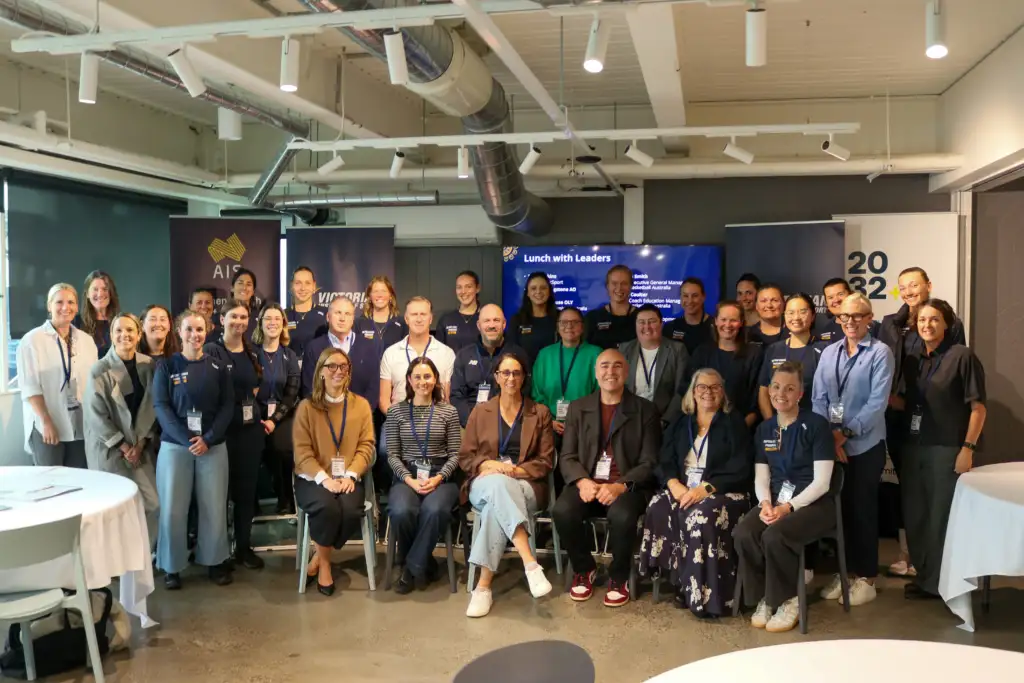



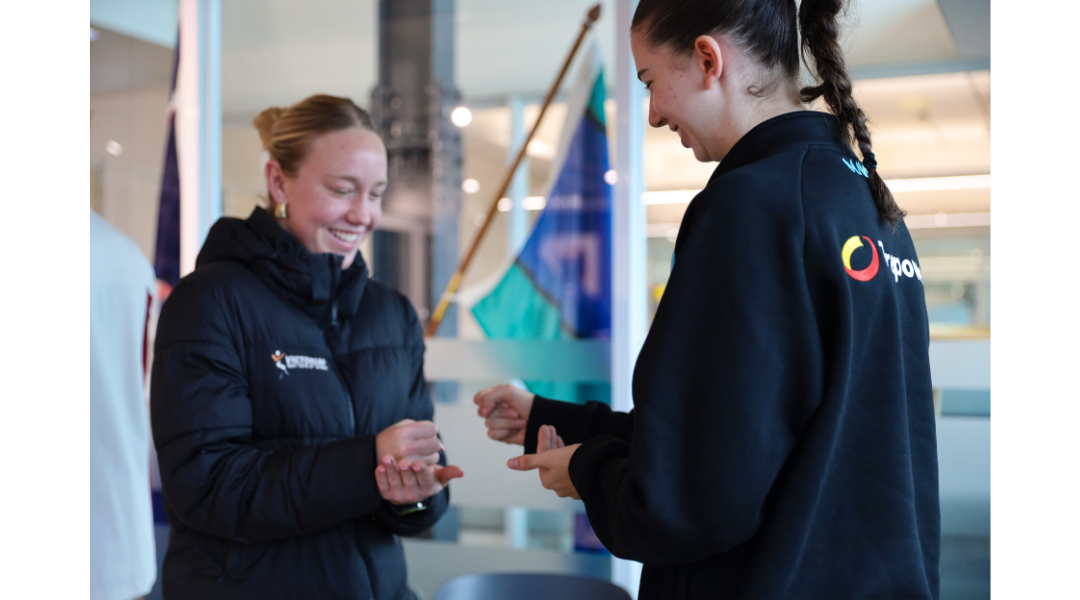
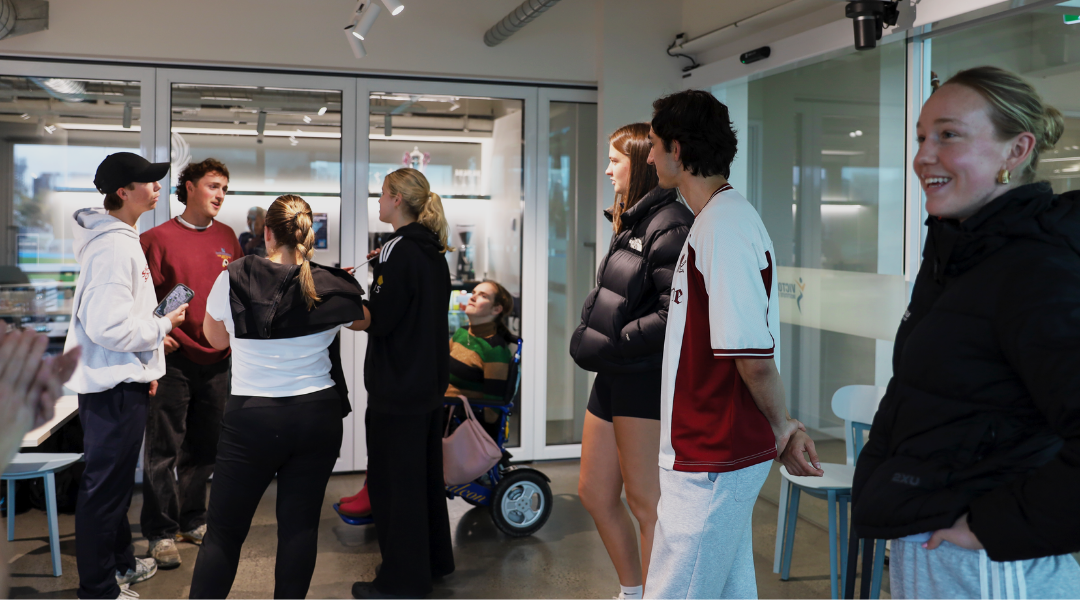
Aimie Rocci stood at the front of a room at the Victorian Institute of Sport (VIS) last month, watching 13 athletes settle into their seats. Fourteen years ago, she was one of them: a Women’s National Basketball League (WNBL) player whose days ran from an early training session, through a full day of work or study, to more training at night. It is a rhythm many athletes in women’s sport know well. The four-month program she was there to deliver, the VIS Athlete Leadership Program (VALP), is built around what those years taught her: leadership is a performance skill.
The 2026 program runs as a four-month, in-person format across five Leadership Labs, delivered jointly by the VIS Performance Lifestyle and Performance Psychology teams. Built on the Australian Institute of Sport (AIS) High Performance Leadership Capability Framework (HPLCF), the national standard for leadership skill in the Australian high performance system, the program also reflects the VIS’s commitment to the Australian Sports Commission’s Win Well principles, which place wellbeing, integrity and legacy alongside performance excellence.
The Athlete Leadership Program is one of the VIS’s longest-running athlete development initiatives, delivered in various forms for more than 20 years. After a pause during the COVID-19 pandemic, it was refreshed as a trial in 2023 and 2024 before expanding to the full five-Lab format for 2026.
For Rocci, the program reflects what she learned from her own playing career. Her time as a full-time athlete in Adelaide was a different kind of freedom, but a different kind of pressure. Injuries, fluctuations in performance and the absence of an outlet beyond the court taught her that identity beyond sport is not a luxury for elite athletes. It is part of what sustains performance under pressure.
That principle is central to how the VIS approaches athlete development. The Institute treats success in sport and life as a single mission, and the VALP is built on it.
Built like a training block
Rocci said the 2026 design reflects how leadership develops.
“Leadership is a set of skills, and skills need time, repetition and reflection to develop,” Rocci said.
“The format was designed so that every Lab builds on the last, and the insights athletes gain are ones they can take directly into their environments.”
The program runs as a series of sessions across a cross-sport athlete cohort, drawing on evidence from performance psychology and behavioural science, translated into structured practice across five Leadership Labs at Lakeside:
- Lab 1 – Know and Lead Yourself
- Lab 2 – Play to Your Values and Strengths
- Lab 3 – Connect and Build Trust
- Lab 4 – Challenge Well
- Lab 5 – Lead Your Journey
Each Lab maps to aspects of the AIS HPLCF framework, covering self-awareness and emotional intelligence, mission and values, authentic communication, fostering belonging, and developing others. Between Labs, athletes complete short self-paced reflections on the newly launched VIS Learning Hub and apply each skill directly into their daily performance environment. The discipline is one elite athletes already apply to their physical training: daily habits that turn into performance gains.
The VALP treats the moments that matter as a trainable skill. Speaking up for their values. Giving a teammate challenging feedback. Making a decision in a final, with seconds to spare and no one in their ear. Athletes as whole people.
For Rocci, the program is part of a broader shift in how the high performance system understands its athletes.
“There has been a real shift in how we see athletes as whole people, and how personal development can be a direct performance enabler. It is genuinely exciting to see this generation buy into that,” she said.
For Cohort 1 athletes, the Labs offer structured practice for moments they have already faced in their sport. VIS Taekwondo athlete Gabby Blewitt said her motivation for participating reflected the kind of growth the program is built to support.
“I wanted to participate to better understand my impact on others and improve my influence as a leader,” Blewitt said.
The VALP adds further momentum to the VIS’s broader athlete development offering, which supports more than 400 athletes across 45 Olympic, Paralympic and Commonwealth Games sports.
Rocci said the goal for Cohort 1 was both immediate and lifelong.
“My hope is that every athlete leaves knowing something about themselves they didn’t before. You can’t lead others well until you can lead yourself. The growth doesn’t stay in sport, and it carries into every part of who they are,” Rocci said.
For Rocci, the program is the one she wishes she had as a young WNBL player. The 13 athletes in the room have four months to find out what it does for them.